“The Stress of Uncertainty: How Policy Shifts Affect Rural Mental Well‑Being” in the Columbia Gorge

Policy uncertainty is not just a paperwork problem. It is a public health burden. In rural places, where jobs, housing, health care, land use, and transportation often depend on public rules, sudden policy shifts can raise stress before any final decision takes effect.
That is the point public leaders in Salem and Olympia should take seriously. Unclear policy creates real strain, especially in communities already dealing with wildfire risk, housing pressure, farm income swings, limited mental health care, and long drives for basic services.
This article is policy analysis, not medical advice. People in crisis should contact local emergency services or call or text 988 for the Suicide and Crisis Lifeline.
Uncertainty wears people down before the rule changes
Most public debate focuses on the final policy. New land use rule. New budget. New permit deadline. New health coverage requirement. New wildfire regulation. New tax or fee.
But rural stress often rises during the waiting period.
A rancher waits to hear if grazing access will change. A family waits to learn whether a local clinic will keep a service. A small employer waits on seasonal labor rules. A Gorge resident waits for a ruling on a housing, tourism, or scenic area restriction. A county planner waits for state guidance that will affect permits, staffing, and public anger.
That waiting is not neutral.
Research on stress has long shown that lack of control and unpredictability raise strain. The American Psychological Association has reported for years that uncertainty about money, health, safety, and the future is a major source of stress for Americans. Rural residents often face those stressors with fewer nearby services.
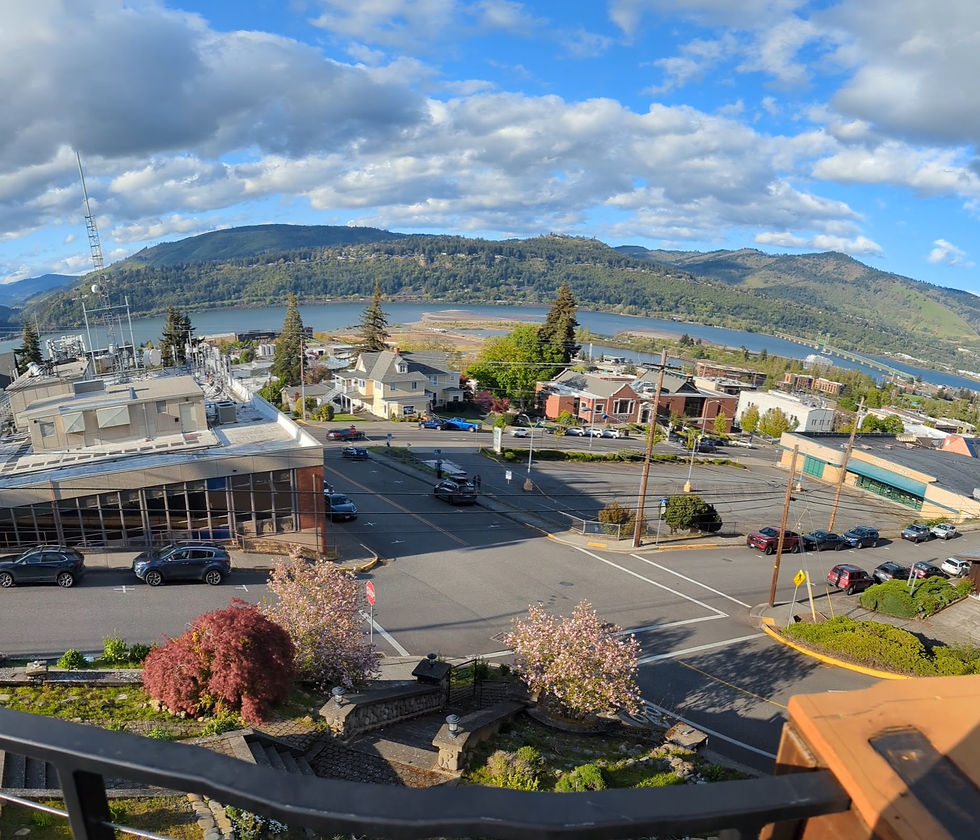
The Columbia Gorge National Scenic Area adds another layer. It is not a typical rural region. It crosses Oregon and Washington. It includes federal, state, tribal, county, city, and private interests. The rules around land, transportation, wildfire, recreation, housing, and economic development often overlap.
That structure protects a remarkable place. It also makes policy shifts harder to read.
When a person cannot tell which agency controls a decision, which deadline matters, or which rule will apply next year, stress increases. The burden reaches beyond the people who follow public meetings. It reaches families, workers, older adults, small farms, caregivers, and young people deciding whether they can stay.
Rural communities have less slack when policy moves fast
Urban areas often absorb policy changes through larger systems. They have more clinics, more rental units, more transit routes, more employers, and more advocacy staff. Rural areas have less slack.
That does not mean rural communities are fragile. It means they are tightly connected.
One clinic closure can change a whole county’s access to mental health care. One road repair delay can add hours to a weekly routine. One housing rule can affect teachers, nurses, farmworkers, and hospitality staff. One shift in wildfire funding can affect insurance costs, land management, and household anxiety.
The U.S. Department of Agriculture’s Economic Research Service has long documented rural differences in income, age, employment mix, and access to services. The Centers for Disease Control and Prevention has also reported higher suicide rates in rural areas than in urban areas. That gap is tied to many factors, including isolation, firearm access, stigma, economic stress, and thin health care networks.
Policy does not cause all of that. But policy can make it worse or better.
A rural resident does not need a policy memo to feel the pressure. They feel it when a benefit renewal becomes harder. They feel it when broadband rules change but service still does not reach their road. They feel it when state wildfire rules shift but insurance bills rise anyway. They feel it when a public hearing is held far away, during work hours, with language that only trained planners can follow.
The process itself can become a stressor.
Fast policy can help during emergencies. But fast policy without clear guidance shifts the cost to residents and local staff. County offices take the calls. School leaders answer anxious parents. Health workers explain coverage rules they did not write. Families spend nights trying to understand what changed.

The Columbia Gorge shows how layered policy becomes personal
The Gorge is a good case study because policy is never abstract there.
Land use rules affect views, farms, forests, tribal interests, recreation, and housing supply. Transportation decisions affect freight, school commutes, emergency response, and access to medical appointments. Wildfire policy affects insurance, evacuation plans, forest treatment, air quality, and fear during smoke season. Tourism policy affects jobs, traffic, trail access, short-term rentals, and public safety.
These issues are connected.
Take housing. A scenic protection rule may serve a valid public purpose. So may a limit on short-term rentals. So may a city’s push for more workforce housing. But if those policies change at different levels of government without clear coordination, residents see conflict instead of governance.
A worker may hear that housing is a priority, while available rentals disappear. A landowner may hear that rural character matters, while permit steps become harder to predict. A local official may hear that the state wants faster housing production, while federal or regional rules limit where building can happen.
That gap breeds mistrust.
Mental well-being depends in part on whether people believe systems are understandable and fair. Public health research often describes this through social determinants of health. Income, housing, transportation, education, and community safety affect health outcomes. Policy shapes each one.
For Gorge communities, mental well-being is tied to questions such as:
Can people afford to live near work and family?
Can older adults get to care without a long drive?
Can young people see a future in their town?
Can families trust evacuation plans during wildfire season?
Can landowners understand what is allowed before they spend savings?
Can tribal rights and cultural resources be respected in decisions that affect the river and land?
These are not side issues. They are conditions for health.
The harm is not only the outcome. It is the churn
Public officials often ask whether a policy is good or bad on the merits. That matters. But rural mental health also depends on how often rules change, how clearly they are explained, and how long people must live in limbo.
Churn has costs.
A Medicaid renewal process that changes can interrupt mental health care. A telehealth rule that expires or remains uncertain can affect counseling access for people who live far from providers. A grant program that opens with a short deadline can favor larger cities with paid staff. A wildfire resilience program that changes standards year to year can make household planning harder.
In rural places, people often wear several roles. A county commissioner may also run a cafe shop. A school counselor may know every family affected by a mill slowdown. A volunteer firefighter may also be a parent caring for an older relative. Public stress travels through those relationships.
The result is emotional load. People must keep track of too much.
They track drought and snowpack. They track smoke. They track fuel prices. They track permit timelines. They track school budgets. They track ferry, bridge, or highway disruptions. They track health coverage. They track whether their adult children can afford to return.
Public agencies cannot remove all uncertainty. But they can reduce avoidable uncertainty.
That starts with plain language. It also requires stable timelines, consistent answers, and early notice when changes are coming. If state leaders want better rural outcomes, they need to treat communication as part of the policy itself.
A rule that no one understands is not finished.

The main counterargument deserves an answer
Some will argue that policy must change. They are right.
Wildfire risk is rising in many Western communities. Housing shortages require action. Health systems need updates. Climate pressure affects water, forests, farms, and infrastructure. Scenic protection needs enforcement. Budgets cannot fund every program forever.
No serious rural policy can freeze the status quo.
The mistake is treating public stress as resistance to change. Often, it is resistance to being surprised, ignored, or forced to carry risk without support.
People can handle hard news better than vague news. A farmer can plan around a firm deadline. A clinic can prepare for a known rule change. A county can staff for a clear mandate. A family can adjust a budget if it knows what benefit, fee, or requirement will change.
Vague promises do the opposite. So do temporary fixes that expire again and again.
Short-term extensions may help lawmakers finish negotiations. But they leave people unsure whether to hire, move, apply, sell, invest, or seek care. That uncertainty has a mental health cost.
A better approach would separate flexibility from confusion. Agencies can update rules while still giving clear timelines. Legislatures can pilot programs while naming review dates. Governors can respond to emergencies while explaining what ends, what continues, and what local governments should tell residents.
Change is necessary. Churn is a choice.
Better policy design can lower stress
Rural mental well-being should be part of policy design from the start. That does not mean every bill needs a mental health label. It means officials should ask how uncertainty will affect daily life.
A practical test would include four questions.
Who must make a decision before the policy is final?
If families, landowners, clinics, counties, or small employers must act before details are settled, the policy creates stress. Agencies should name what people can safely do now and what they should wait to do.
How far must someone travel to fix a problem?
If the answer is several hours, the policy must include remote access, phone support, and local partners. Online forms help only when broadband, language access, and digital skills are not barriers.
What happens if guidance changes midstream?
Rural residents should not pay the price for agency confusion. Grace periods, grandfathering rules, and clear appeal paths can prevent harm.
Who explains the change locally?
State agencies often rely on counties, schools, clinics, and nonprofits to explain policy. Those groups need funding, training, and enough lead time. Otherwise, the state exports stress to local workers.
This kind of review is not soft. It is basic risk management.
The same logic already guides emergency planning. Clear roles save time. Clear warnings save lives. Clear maps reduce panic. Policy shifts deserve the same discipline.
Salem and Olympia should treat predictability as infrastructure
Roads, bridges, broadband, and water systems are infrastructure. Predictable governance is infrastructure too.
For the Gorge, that means coordination across state lines. Oregon and Washington do not need identical policies on every issue. But when decisions affect the same labor market, river corridor, fire zone, housing supply, or scenic area, leaders should compare timelines and public guidance before changes land.
Salem and Olympia should also give rural agencies more realistic implementation windows. A large agency can assign a policy team. A small county may have one person managing several programs. A small clinic may rely on staff who already carry full caseloads. A school district may not have extra communications support.
State leaders should not confuse silence with consent. Many rural residents do not attend hearings because they are working, caregiving, driving long distances, or tired of meetings that feel decided in advance. That does not mean the stress is absent.
Public trust grows when agencies report back. If residents raise concerns, officials should explain what changed because of that input and what did not. A public comment process that disappears into a file deepens cynicism.
Trust is built when people can see the path from concern to decision.

A clear rule is kinder than a vague promise
The strongest rural policy is not always the easiest one. It is the one people can understand, plan around, and trust.
That matters for mental well-being. Uncertainty drains attention. It raises conflict. It makes rumors more powerful. It pushes local workers into the role of explaining state and federal choices with too little information. It makes families feel trapped between rules they cannot control and costs they cannot avoid.
The Gorge will keep facing hard choices. Scenic protection, housing, wildfire safety, tribal rights, transportation, energy, tourism, and health access will keep colliding. That is the reality of a valued rural region under pressure.
Policy shifts will continue. They should. But the way leaders make those shifts can either add stress or reduce it.
The standard should be simple. Tell people what is changing. Tell them when. Tell them who is affected. Tell them what to do next. Fund the local messengers. Leave enough time for rural life to adjust.
Mental well-being is shaped by more than clinics and crisis lines. It is shaped by whether people can make plans and believe those plans will still matter next month. Predictability will not solve every rural problem, but without it, every problem feels heavier.


Comments