Columbia Gorge Farmworkers and Mental Health The Cost of Neglecting People and Ecosystems

The fruit that leaves the Columbia Gorge carries more than sweetness. It carries the pressure of long days, thin margins, wildfire smoke, heat, housing stress, family separation, and the quiet fear that one missed paycheck or one injury can unravel a household.
The Columbia River Gorge is often described through its beauty. Cliffs, orchards, wind, water, salmon, cherries, pears, apples, vineyards, and small towns all share the same narrow corridor. But a place can be beautiful and still ask too much of the people who keep it running.
For many farmworkers and local workers, mental health is not a separate issue from land, water, wages, housing, or climate. It is tied to all of them. When the ecosystem is treated as something to extract from, the people closest to it often pay first. Columbia Gorge farmworkers and mental health belong in the same conversation as water rights, wildfire planning, pesticide exposure, labor protections, and the future of local agriculture.
This article is informational only and is not a substitute for mental health care, legal advice, or medical support.

The Gorge is not just scenery
The Columbia Gorge is a working region. Its economy depends on farms, packing houses, transportation, food service, construction, caregiving, tourism, and seasonal labor. Many of the people doing this work live with unstable schedules and high physical demands. Some move with the harvest. Others stay year-round and support families across generations.
Farmworkers in the Gorge often carry multiple burdens at once:
Long hours during harvest windows
Heat, smoke, cold, and repetitive physical labor
Limited access to affordable housing
Transportation barriers across rural areas
Language barriers in health care and public services
Fear tied to immigration status or family separation
Pressure to keep working through pain, grief, or exhaustion
These pressures do not remain outside the body. They show up as anxiety, depression, sleep disruption, substance use, chronic stress, family strain, anger, withdrawal, and despair. They also show up in quieter ways, such as a parent who stops talking at dinner, a worker who cannot rest even on a day off, or a teenager who feels the weight of interpreting bills, school forms, and medical information for adults.
Mental health in this context is not only about individual coping skills. It is about the conditions that make coping necessary every day.
History keeps warning the Gorge
The Columbia River Gorge has a long history of people depending on the river, and of powerful systems reshaping that dependence.
Indigenous peoples have cared for and lived with the river since time beyond written record. Salmon, roots, berries, trade, ceremony, and seasonal knowledge connected community health to ecological balance. The river was not just a resource. It was, and remains, a relative, a food source, a route, a teacher, and a responsibility.
Then came settlement, land seizure, industrial development, rail lines, roads, dams, irrigation systems, and market agriculture. These forces brought wealth to some and deep loss to others. They changed fish runs, water flows, access to traditional places, and the meaning of work. They created the modern agricultural economy while often ignoring the people whose labor and knowledge made life in the Gorge possible.
That pattern still matters. A region cannot harm land and then expect workers to remain well. It cannot disrupt salmon habitat, overdraw water, expose workers to dangerous conditions, and treat housing as an afterthought without creating human damage.
History has shown a recurring failure: when leaders protect production but not ecosystems, and protect profit but not workers, the whole community becomes less stable.
Environmental strain becomes emotional strain
Climate stress has made the link between ecosystem health and mental health harder to ignore.
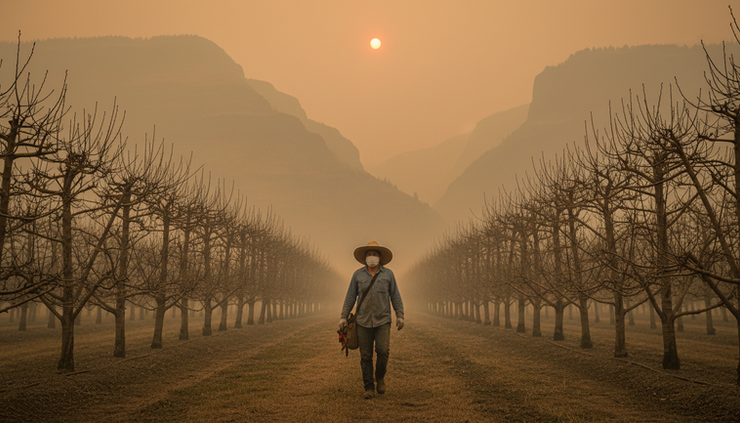
Hotter summers affect orchard crews, vineyard workers, construction workers, and anyone laboring outdoors. Smoke from wildfires can shut down work, make breathing harder, and create fear for people who cannot simply stay inside. Drought and shifting water patterns add pressure to growers, workers, and towns. Pest changes and crop uncertainty can raise costs and shorten tempers.
For workers paid by the hour or by production, a dangerous weather day creates a hard question: protect health or earn rent money. That is not a real choice. It is a sign of a broken system.
Environmental stress also affects identity. People who have spent years in orchards know the feel of seasons. They notice when bloom shifts, when smoke lingers, when water is scarce, when the heat feels sharper. That kind of change can cause grief. It can make the future feel less reliable.
Mental health researchers sometimes describe distress linked to environmental change as climate anxiety or ecological grief. In farming communities, those feelings are not abstract. They live in the body after another summer of smoke, another crop damaged by weather, another season of hoping the work will hold.

The hidden labor of staying well
Many farmworkers already practice forms of mental health care, even when they do not call it that. They pray. They call family. They cook familiar food. They gather with neighbors. They send money home. They play music after work. They keep routines, tell jokes, watch children, attend church, and help one another find rides, clinics, jobs, and housing.
These acts matter. They are forms of survival and community care.
But community care should not excuse institutional neglect. A worker should not have to rely only on personal strength while facing unsafe heat, crowded housing, wage theft, racism, language barriers, or lack of sick leave. Resilience has limits. When people praise workers for being strong but refuse to reduce the harm they face, praise becomes another burden.
The Gorge also has many local workers who may not identify as farmworkers but share similar stress. Packing house employees, restaurant cooks, hotel cleaners, warehouse workers, childcare providers, and maintenance crews all help the regional economy function. Their stress is tied to the same conditions: seasonal swings, low wages, housing shortages, health care access, and a local economy shaped by visitors and land values.
That shared pressure can create division when resources feel scarce. It can also create solidarity if the region chooses to see working people as connected rather than replaceable.
Why access to care remains uneven
Mental health care can be difficult to reach in rural communities. In the Gorge, distance, cost, insurance gaps, work schedules, and language access can all stand in the way. Even when counseling is available, appointments during work hours may be impossible. A farmworker may fear losing wages, losing a job, or being judged.
Cultural stigma can also silence people. In some families, emotional distress is carried privately. A person may describe anxiety as headaches, stomach pain, tiredness, or “nerves.” Others may avoid care because they have experienced discrimination or because systems have not treated them with respect.
Good mental health support in the Gorge must meet people where they are. That means:
Care available in Spanish and other community languages
Flexible hours during harvest and packing seasons
Mobile clinics and trusted community health workers
Confidential support that does not increase immigration fears
Help with transportation, childcare, and paperwork
Training for supervisors to recognize distress and prevent harm
Partnerships with churches, schools, worker centers, clinics, and local groups
The best care does not wait until someone is in crisis. It reduces the daily stress that pushes people toward crisis.
The workplace can either harm or protect
Farm and packing work will always be demanding. But demanding work does not have to mean harmful work.
Employers, contractors, and regional leaders can reduce mental health strain by addressing the daily conditions workers face. Some changes are practical and direct.
Heat and smoke protections matter. Shade, water, rest breaks, masks when appropriate, and clear stop-work policies protect bodies and minds. Workers should not have to guess whether it is safe to speak up.
Stable scheduling matters. Last-minute changes make it hard to arrange childcare, transportation, medical visits, and sleep.
Safe housing matters. Overcrowded or unsafe housing increases stress, conflict, illness, and exhaustion.
Fair pay matters. Mental health suffers when people work full days and still cannot cover basic needs.
Respect matters. Harassment, threats, racism, and retaliation create fear that follows workers home.
Voice matters. Workers know the job. They know where the water station is missing, which equipment is unsafe, which supervisor humiliates people, and which rules only exist on paper. Listening to workers is not charity. It is how a workplace becomes safer.
Protecting ecosystems protects people
The Columbia Gorge cannot separate labor policy from environmental policy. The same heat that stresses a pear tree stresses the worker pruning it. The same smoke that damages a crop enters a worker’s lungs. The same water shortage that threatens a harvest threatens household stability. The same land-use decisions that shape habitat also shape housing, transportation, and access to care.
A healthier future requires decisions that treat ecological protection and worker protection as one shared project.
That can include:
Protecting watersheds and using water with long-term care
Supporting farming practices that reduce chemical exposure
Planning for wildfire smoke as a worker safety issue
Preserving affordable housing near jobs and services
Investing in public transit and rural transportation
Funding community-based mental health care
Respecting tribal sovereignty and Indigenous ecological knowledge
Building local policy with workers at the table
The point is not to romanticize farming or the Gorge. It is to tell the truth. Food systems depend on ecosystems. Ecosystems depend on care. Workers depend on both.
When any part is treated as disposable, the cost returns through illness, turnover, family stress, land damage, and community mistrust.
The old lesson is still waiting to be learned
The Gorge has seen what happens when short-term gain outruns responsibility. River systems are altered. Fish runs decline. Housing becomes unaffordable. Workers become invisible. Communities absorb harm slowly, then all at once.
The lesson is not that the past was simple or pure. It was not. The lesson is that decisions carry memory. A dam, a sprayed field, a labor camp, a clinic that never gets funded, a tenant priced out of town, a worker ignored after heat illness, each one leaves a mark.
Mental health carries those marks too.
For farmworkers, stress does not come only from one hard day. It builds from repeated messages:
Your labor is needed, but your comfort is optional.
Your presence is essential, but your voice is inconvenient.
Your family belongs to the economy, but not always to the planning table.
Your pain is personal, even when the causes are public.
A healthier Gorge must send different messages, through policy and practice. It must say that workers are not tools of production. Families are not side effects of agriculture. The river is not just infrastructure. The land is not just scenery. The people at the center of the Gorge deserve to live, work, rest, and heal with dignity.

What repair can look like
Repair does not require one perfect program. It requires steady choices that line up with the truth of the place.
Clinics can hire bilingual and bicultural staff. Schools can support children who carry adult responsibilities at home. Employers can create real heat and smoke plans before emergencies arrive. Counties and cities can treat farmworker housing as essential infrastructure. Growers can reduce exposure risks and invite worker feedback without retaliation. State and regional leaders can fund mental health care that reaches orchards, packing houses, churches, schools, and rural neighborhoods.
Neighbors can also do something simple but powerful: stop treating farm labor as background. Learn who harvests the food, who packs it, who drives it, who cleans the rooms visitors sleep in, and who can no longer afford to live near the places they serve.
The Columbia Gorge is often loved for its views. Love must become responsibility. If the region wants a future with healthy farms, clean water, salmon, stable families, and strong towns, it cannot keep separating the well being of workers from the well being of the land.
The cost of neglect is already visible. The work now is to stop calling that cost normal.


Comments